
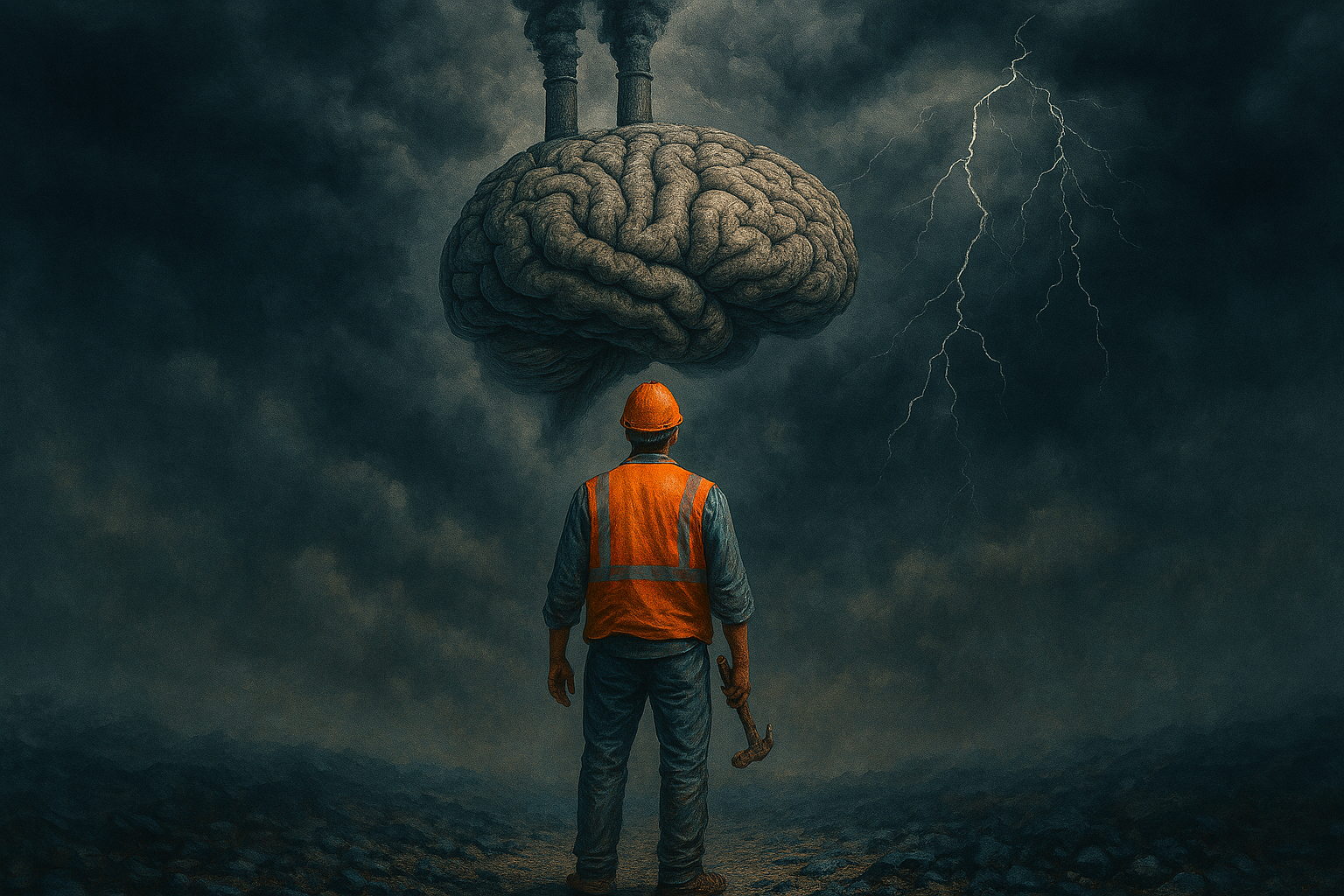
Beat to the Bone: Getting Help Before You Break
In December 2023, the CDC released a sobering report detailing suicide rates across industries and occupations in the United States. The findings are stark: suicide among working-age Americans has surged by approximately 33% over the past two decades (Centers for Disease Control and Prevention [CDC], 2023). This isn’t just a statistic—it’s a wake-up call. Behind these numbers are real people, families, and communities grappling with silent suffering.
The report reveals that certain industries carry significantly higher suicide risks. Mining, construction, agriculture, arts and entertainment, and personal care services top the list. For example, male workers in aerospace manufacturing had a suicide rate of 147.5 per 100,000, while female workers in performing arts faced rates as high as 46.5 (Centers for Disease Control and Prevention [CDC], 2023). These figures highlight a troubling reality: many of the jobs that keep our society running are also the ones where mental health support is most urgently needed.
Why are these numbers so high? The CDC points to factors like job stress, low control over work conditions, poor support systems, and access to lethal means. But beneath these surface-level causes lies a deeper issue—many workers are suffering in silence. In industries where toughness is often valued over vulnerability, asking for help can feel like a betrayal of identity. That stigma can be deadly.
For many working-class people, the grind never stops. Long hours, unpredictable shifts, and physically demanding labor take a toll not just on the body, but on the mind. When you're constantly worried about making ends meet, dealing with unsafe conditions, or feeling like you're just a number to your employer, stress becomes a daily companion. Add in limited access to affordable mental health care and a culture that often says “suck it up,” and you've got a recipe for burnout. The pressure to provide, perform, and persevere—without complaint—can quietly erode your mental health over time. Burnout is more than just being tired—it’s a full-body and mind shutdown:
Physical exhaustion
Constant fatigue, aches, and sleep problems.Emotional numbness or cynicism
Feeling detached, bitter, or hopeless about work or life.Poor judgment and concentration
Making mistakes, zoning out, or forgetting things.Guilt and self-doubt
Feeling like you're failing at work or home.Disconnection from coworkers or family
Losing interest in socializing or feeling misunderstood.Increased absenteeism or presenteeism
Missing work—or showing up but mentally checked out.
Burnout doesn’t always look dramatic. Sometimes it’s just dragging yourself out of bed, feeling numb on the job, or snapping at your kids without knowing why. For working-class folks, burnout often gets mistaken for laziness or bad attitude. But it’s not weakness—it’s a warning sign that something’s got to give.
When life feels overwhelming, people reach for whatever helps them get through the day. Many workers feel stuck between a rock and a hard place. Often time and accessibility seem scarce, workers reach for something quick and easy, such as:
Substance use
Alcohol, drugs, or smoking to numb stress or pain.Avoidance and denial
Ignoring problems, procrastinating, or refusing to talk about stress.Overworking
Using work to escape personal issues, leading to deeper burnout.Isolation
Withdrawing from friends, family, or coworkers.Aggression or irritability
Lashing out due to bottled-up frustration.Emotional suppression
“Stuffing it down” instead of processing feelings
These coping strategies might offer short-term relief, but they often lead to long-term damage. These habits don’t make someone bad—they make them human. But they also make healing harder.
Mental health therapy offers a lifeline. It’s not just about treating depression or anxiety after they’ve taken hold—it’s about building resilience, reframing narratives, and empowering individuals to navigate life’s challenges before they become crises. Therapy provides a safe space to unpack trauma, explore emotions, and develop coping strategies that can make all the difference.
That’s where Legend Counseling steps in. Legend Counseling offers telehealth therapy that’s flexible, accessible, and tailored to your lifestyle. Whether you're a construction worker battling burnout or a creative professional feeling isolated, Legend provides tools to help you reclaim your story.
Skilled trades and blue-collar jobs are roles that offer tangible results and a sense of pride in building, fixing, or creating something real. Whether it's welding steel, wiring homes, or repairing engines, the work is often essential to the functioning of society—and that matters. These jobs foster a strong sense of identity, community, and craftsmanship, passed down through generations. Unlike many desk-bound roles, trades often allow people to see the direct impact of their labor, which can be incredibly fulfilling. In a world that often overlooks manual work, skilled trades remind us that dignity and purpose are found in doing something well and knowing it truly helps others.
The CDC emphasizes that workplaces can be powerful settings for suicide prevention. But change starts with individuals. If you’re struggling—or if you know someone who is—don’t wait. Therapy is not a sign of weakness; it’s a step toward strength.
Legend Counseling invites you to live your legendary life. Because every story deserves a hopeful chapter.
Centers for Disease Control and Prevention. (2023, December 15). Suicide rates by industry and occupation — National Violent Death Reporting System, 2021. Morbidity and Mortality Weekly Report, 72(50), 1341–1347. https://www.cdc.gov/mmwr/volumes/72/wr/mm7250a2.htm
